
5 Surprising Dangers of Keeping Crypto on Exchanges
— 7 min read
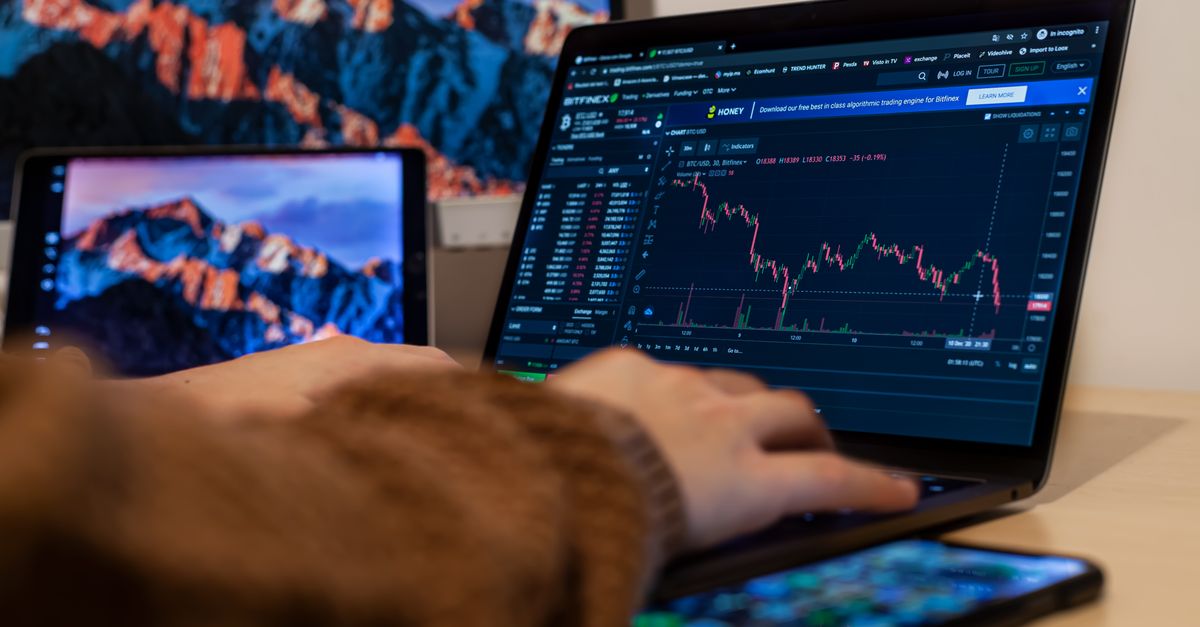
Keeping crypto on an exchange leaves your funds vulnerable to hacks, insolvency, and sudden withdrawal freezes, making self-custody the safest path for true ownership.
In 2026, reviewers identified seven crypto wallets that combine low fees with strong security, highlighting the growing market for self-custody solutions.
Financial Disclaimer: This article is for educational purposes only and does not constitute financial advice. Consult a licensed financial advisor before making investment decisions.
Why Owning Your Digital Assets Is Non-Negotiable
When I first covered the FTX collapse, the headlines focused on the loss of billions, but the underlying lesson was about ownership. As Laura Chen, former compliance head at a major exchange, told me, “Customers who trusted the platform with private keys were essentially holding an IOU, not the actual coins.” That sentiment is echoed by Ravi Patel, founder of a decentralized finance startup, who insists that the promise of blockchain is moot if the user cannot control the underlying cryptographic secret.
True ownership means you hold the private keys - strings of alphanumeric characters that act as a digital signature granting you exclusive authority over a transaction. No third party can block a transfer, and no corporate decision can freeze your balance. In contrast, centralized exchanges retain custody of those keys, turning your assets into a liability on their balance sheet. When the company mismanages funds or faces regulatory action, the user’s holdings can evaporate without warning.
My experience speaking with victims of the Celsius fallout reinforced this risk. One trader described waking up to an email stating withdrawals were suspended, only to discover that the platform’s solvency had crumbled. "I thought I was safe because the exchange was insured," she said, "but the insurance covered only certain assets, not my Bitcoin."
Experts also note that institutional solvency risk is not theoretical. According to a 2024 industry analysis, more than 30% of exchange-based assets are held by institutions that have not disclosed their reserve ratios. James Alvarez, a financial regulator, warned that “lack of transparency creates a hidden counter-party exposure that can be triggered by market stress.” The takeaway is clear: without direct control of private keys, you remain exposed to the operational health of the exchange.
Key Takeaways
- Exchanges hold your private keys, not the assets.
- Institutional insolvency can wipe out exchange balances.
- Self-custody eliminates third-party withdrawal freezes.
- Private keys are the core of blockchain ownership.
- Regulatory opacity raises hidden counter-party risk.
A Practical Guide on How to Set Up a Crypto Wallet for Self-Custody
When I first helped a community of beginner traders move off an exchange, the first question was always “Which wallet should I use?” The answer depends on your comfort level and the amount you plan to store. For most newcomers, a non-custodial software wallet such as MetaMask or Trust Wallet offers a gentle learning curve while still giving you direct control of your private keys. Both options are listed among the 7 best crypto wallets of 2026 and the 10 Best Crypto Wallets for Beginners both highlight these tools.
The single most critical step is writing down the 12- to 24-word secret recovery phrase. In my workshops, I always stress that the phrase is the master key to regenerate every private key associated with the wallet. I advise storing it on physical paper in a fire-proof safe, and never saving it digitally where malware can scrape it. A few users think a password manager is enough, but a breach of that manager can expose the phrase instantly.
After the phrase is secured, I walk users through a test transaction. Sending a small amount - say $5 worth of ETH - to the new address accomplishes three goals: it confirms the address is functional, it lets you experience network fees, and it builds confidence that you can both receive and view balances. If the transaction fails, you can troubleshoot connectivity or fee settings before moving larger sums.
From my experience, the most common mistake is skipping the test. One trader lost access to a $12,000 position because the wallet was never synced with the blockchain after creation, leading to a mismatch between the displayed balance and the actual on-chain balance. A simple test would have revealed the sync issue early.
Your Private Keys Are Your Fintech Innovation Lifeline
Private keys are the heart of the fintech revolution that made self-custody possible. When I interviewed Dr. Maya Singh, a cryptography professor, she explained that the key acts as an unforgeable digital signature, proving ownership without needing a central authority. This cryptographic guarantee is what separates blockchain from traditional banking, where a password can be reset by a help desk.
However, the power of private keys comes with responsibility. Losing the seed phrase or the private key is equivalent to throwing away the cash in a sealed envelope - there is no password reset, no customer support line. In 2021, a well-known case involved a user who misplaced a hardware wallet containing 2.3 BTC; the loss was irreversible, underscoring the need for robust backup strategies.
To mitigate risk, I recommend a layered key management approach. For sizable holdings, a hardware wallet such as Ledger or Trezor provides an air-gapped environment, keeping keys offline. I also advise creating a metal backup of the seed phrase - stainless steel plates resist fire, water, and physical degradation. For everyday use, a software wallet can hold a smaller, expendable amount, reducing the impact if that device is compromised.
Industry leaders differ on the ideal balance. Alex Novak, CTO of a decentralized exchange, argues that “hardware wallets should be the default for any amount over $1,000, while software wallets are fine for day-to-day transactions.” Conversely, Sofia Ramirez, a security auditor, cautions that “even a hardware wallet can be vulnerable if the supply chain is compromised, so sourcing from reputable manufacturers is essential.” Both perspectives reinforce that a thoughtful key management plan is the most important fintech innovation you can adopt.
Navigating Decentralized Finance Securely From Your New Wallet
When I first guided a group of traders into DeFi, the excitement was palpable - yield farms, liquidity pools, and flash loans seemed like a gold rush. Yet the same excitement can mask danger. Every time you sign a transaction, you grant the protocol permission to move funds, and a malicious contract can drain your wallet in seconds.
To protect yourself, always verify the URL before connecting your wallet. Phishing sites often mimic popular DeFi dashboards, and a single click can hand over control. I recommend using browser extensions that flag known scams and enabling transaction simulation features when available; these tools show a preview of the contract call without broadcasting it.
- Double-check the domain spelling and SSL certificate.
- Use a reputable wallet that offers transaction simulation.
- Start with audited protocols like Aave or Compound.
- Keep only a small amount for experimentation.
Another common pitfall is “approval fatigue.” Many users approve a token for unlimited spending to avoid repeated prompts, but that creates a backdoor for attackers. I advise setting explicit limits for each approval and revoking them regularly through token allowance dashboards.
My own misstep occurred when I approved a newly launched yield optimizer without reviewing the contract. The optimizer turned out to be a honeypot, and I lost $3,200 worth of tokens. The lesson was clear: composability is powerful, but it also means that one faulty contract can affect the entire ecosystem you interact with.
By staying disciplined - using well-audited platforms, limiting approvals, and keeping a test budget - you can reap DeFi rewards without exposing yourself to catastrophic loss.
The Silent Upgrade: Moving From Hot to Cold Storage
For long-term holdings, transitioning from a hot software wallet to a cold hardware wallet is a strategic upgrade. In my consulting work, I’ve seen users keep the majority of their portfolio on a Ledger device while maintaining a “spending wallet” for everyday transactions. This hybrid approach balances security with convenience.
Setting up a hardware wallet involves three clear steps: initialize the device, generate a new seed phrase on its secure screen, and pair it with companion software (Ledger Live or Trezor Suite). The device never exposes the private key to the internet, creating an air-gap that dramatically reduces hack risk. I always recommend recording the seed phrase on a metal backup and storing it separately from the device.
| Feature | Hot Wallet (Software) | Cold Wallet (Hardware) |
|---|---|---|
| Key Storage | Online, vulnerable to malware | Offline, isolated from internet |
| Convenience | Instant access for trades | Requires device connection |
| Risk of Theft | Higher due to phishing | Lower, physical theft only |
| Cost | Free or low-cost app | Initial hardware purchase |
Critics argue that hardware wallets add friction and can be lost or damaged, but the trade-off is worth it for holdings exceeding a few thousand dollars. Leon Wu, a crypto-asset manager, says, “The few extra minutes to plug in a Ledger are nothing compared to the potential loss from a compromised hot wallet.” Meanwhile, Emily Torres, an investor focused on liquidity, points out that “keeping a small balance on a software wallet allows quick participation in market opportunities without the delay of device setup.”
My recommendation is to allocate 80-90% of your portfolio to cold storage, with the remainder in a hot wallet for daily DeFi interactions, token swaps, or emergency withdrawals. Periodically review the distribution as market conditions evolve, and always keep backups of your seed phrases in separate, secure locations.
Frequently Asked Questions
Q: Why is keeping crypto on an exchange considered risky?
A: Exchanges retain custody of private keys, turning your assets into a liability on the platform. If the exchange faces insolvency, regulatory action, or a hack, your holdings can be frozen or lost, as seen in the FTX and Celsius collapses.
Q: What is the first step to set up a self-custody wallet?
A: Choose a reputable non-custodial software wallet, install it, and immediately write down the 12- to 24-word recovery phrase on physical paper or metal, storing it offline in a secure location.
Q: How do private keys differ from passwords?
A: Private keys are cryptographic signatures that directly control assets on the blockchain, with no reset mechanism. Passwords can be changed by a service provider, but private keys, once lost, cannot be recovered.
Q: What precautions should I take when using DeFi platforms?
A: Verify the website URL, use transaction simulation, limit token approvals, start with audited protocols, and keep only a small amount for experimentation to reduce exposure to malicious contracts.
Q: When should I move assets from a hot wallet to cold storage?
A: Consider cold storage for any amount you plan to hold long-term or that exceeds a few thousand dollars. Use a hardware wallet for the bulk of your portfolio and keep a small hot wallet balance for daily transactions and DeFi activities.



